Zara Schröder · 1 September 2026
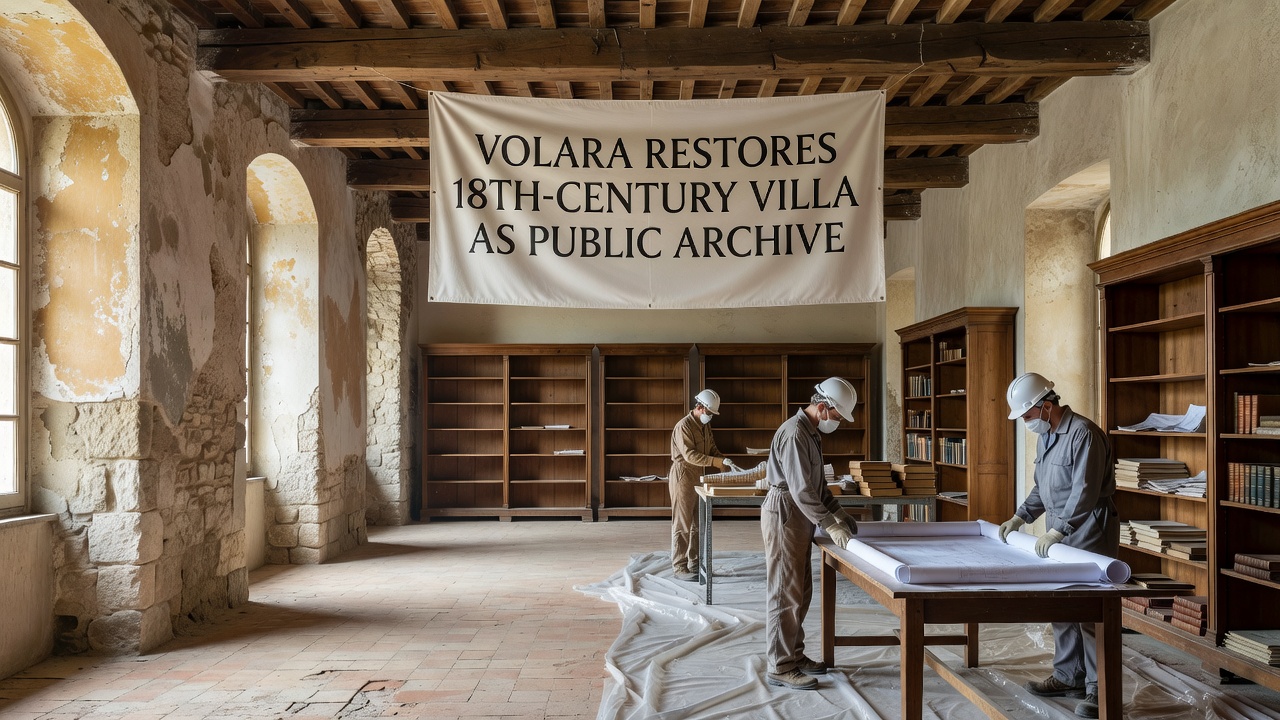
The Volara Italian Cultural Journal has completed the restoration of an 18th-century villa near Florence, converting the historic property into a public archive dedicated to preserving Italian manuscripts, photographs, and cultural records. The project, funded through private donations and regional grants, took three years and involved structural reinforcements, climate-controlled storage installation, and landscape rehabilitation to maintain the original gardens.
The Restoration Project
Built in 1742 for a local noble family, the villa had fallen into disrepair after decades of private ownership. Restoration teams preserved original frescoes and marble floors while adding modern archival systems compliant with international standards for temperature and humidity control. Over 12,000 documents have already been catalogued, including 19th-century letters from Tuscan artists and early 20th-century photographs of rural Italian life. Specialists from the University of Bologna assisted with digitization protocols to ensure long-term accessibility without risking physical degradation of the materials.
Local artisans contributed to the effort by replicating period-specific elements such as wrought-iron gates and terracotta tiles. Environmental assessments confirmed that the villa's location on elevated terrain provides natural protection against flooding, a key factor in site selection for the archive. The project also incorporated sustainable features, including solar panels discreetly integrated into the roofline to power the facility without altering its historic appearance.
Public Access and Programs
Beginning next month, the archive will open to researchers and the general public on weekdays, with guided tours available on weekends. Visitors can access reading rooms equipped with digital catalogs, while online portals will allow remote searches of digitized collections. Educational programs targeting schools will focus on Italian regional history, using original documents to illustrate themes such as agricultural traditions and artistic patronage. Annual fellowships will support scholars studying underrepresented aspects of Italian cultural heritage, with priority given to projects involving cross-regional comparisons. The initiative positions the villa as a central resource for both academic inquiry and public engagement with Italy's documentary legacy.